Who was right in the Hatfields and McCoys feud?
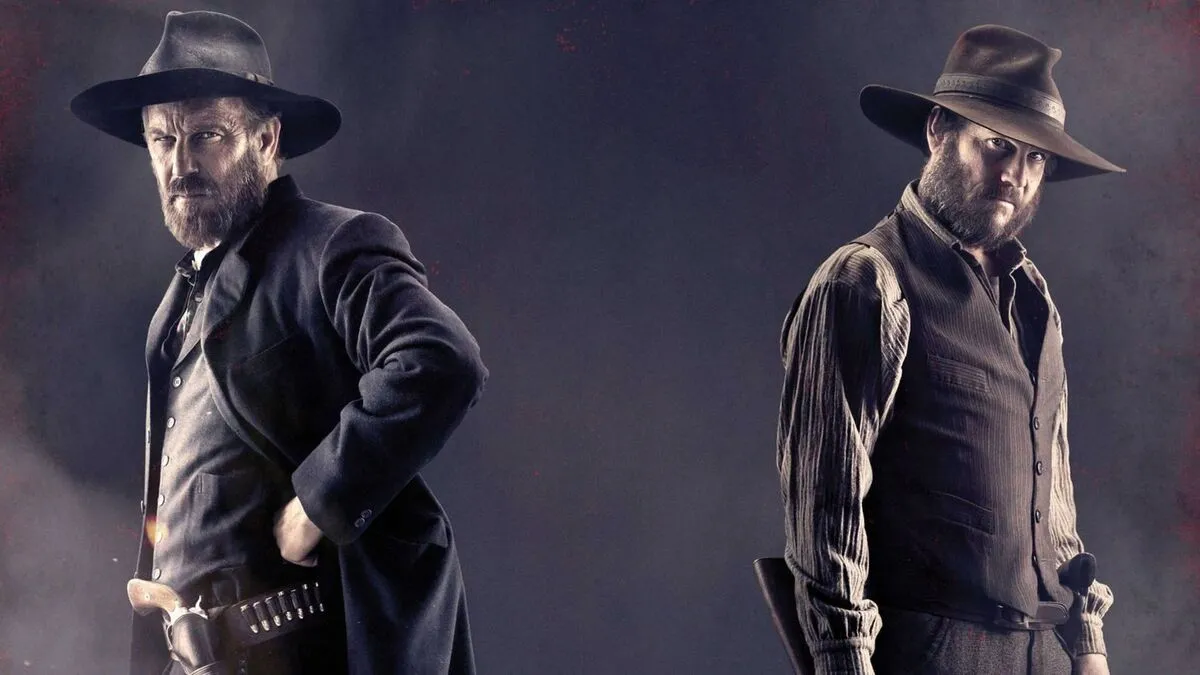
Most people asking this have just watched Hatfields & McCoys, the 2012 miniseries with Kevin Costner as Devil Anse Hatfield and Bill Paxton as Randall McCoy — so here are both answers.
On screen, the blame tilts one way; in the historical record, it tilts another. And in neither version does anyone come out clean.
What the miniseries says
The three-part series aired on History over May 28–30, 2012, pulled a record 13.9 million viewers on night one, and won Emmys for Costner and for Tom Berenger's snarling Jim Vance. Its answer to "who was right" is built into the casting: Costner's Anse is measured and reluctant, Paxton's Randall curdles into a bitter, God-haunted wreck, and most of the worst decisions get routed through Uncle Jim Vance, the designated villain.
The show also invents its founding grievance.
It opens with Anse deserting the Confederate army while Randall stays and suffers — a personal betrayal the real record doesn't document.
That framing quietly stacks the deck: the feud becomes a tragedy that happened to a reasonable Anse, rather than one he helped run.
Viewers finishing the series sympathetic to the Hatfields are reacting to a writing choice, not the evidence.
What the record says
The first blood was McCoy blood: Asa Harmon McCoy, a returning Union soldier, was hunted down and killed in January 1865, with blame falling on Jim Vance and his Logan Wildcats. Nobody was prosecuted. The 1878 hog trial went to the Hatfields before a Hatfield justice of the peace, and the key witness, Bill Staton, was later killed by two McCoys who walked on self-defense.
Then the two acts nobody can defend.
In August 1882, three McCoy brothers stabbed Ellison Hatfield 26 times and shot him at an election-day fight; when Ellison died, Devil Anse's men — Anse very much present — tied the three to pawpaw bushes and executed them with roughly 50 shots.
On January 1, 1888, a Hatfield raid led by Vance and Cap Hatfield burned Randall's cabin, killed his daughter Alifair and son Calvin, and beat his wife nearly to death.
The law's answer came after the US Supreme Court's 1888 Mahon v. Justice ruling let Kentucky try its Hatfield prisoners: life sentences all around, and Ellison "Cottontop" Mounts hanged before thousands in Pikeville on February 18, 1890. His reported last words from the scaffold:
"The Hatfields made me do it!"
The verdict, on both scoreboards
- On screen — the miniseries pins the engine of the feud on Jim Vance and hotheaded sons, softening Devil Anse into a man swept along. Even-handed in its atrocities, generous in its portraits.
- In the record — the McCoys had the stronger grievance: Randall lost five children and a brother, the two worst massacres were Hatfield operations, and every conviction and the only hanging landed on the Hatfield side.
- The McCoy stain — three of Randall's sons committed the murder that lit the fuse, and their allies gunned down Jim Vance without trial during the 1888 manhunt.
- The real fuel — timber money and a 5,000-acre land dispute between Devil Anse and lawyer Perry Cline did as much as honor ever did.
So: history's sympathy goes to Randall McCoy, who died broken in 1914 from burns suffered in an accidental fire, while Devil Anse got baptized, prospered, and died in bed in 1921. The show's sympathy runs the other way. Take your pick of scoreboard.
For the record: the families settled it themselves eventually — an official truce signed by descendants in 2003, and before that, a 1979 face-off on Family Feud, playing for cash and a pig.