Why did The Right Stuff bomb? It won four Oscars — and still couldn't earn back its budget
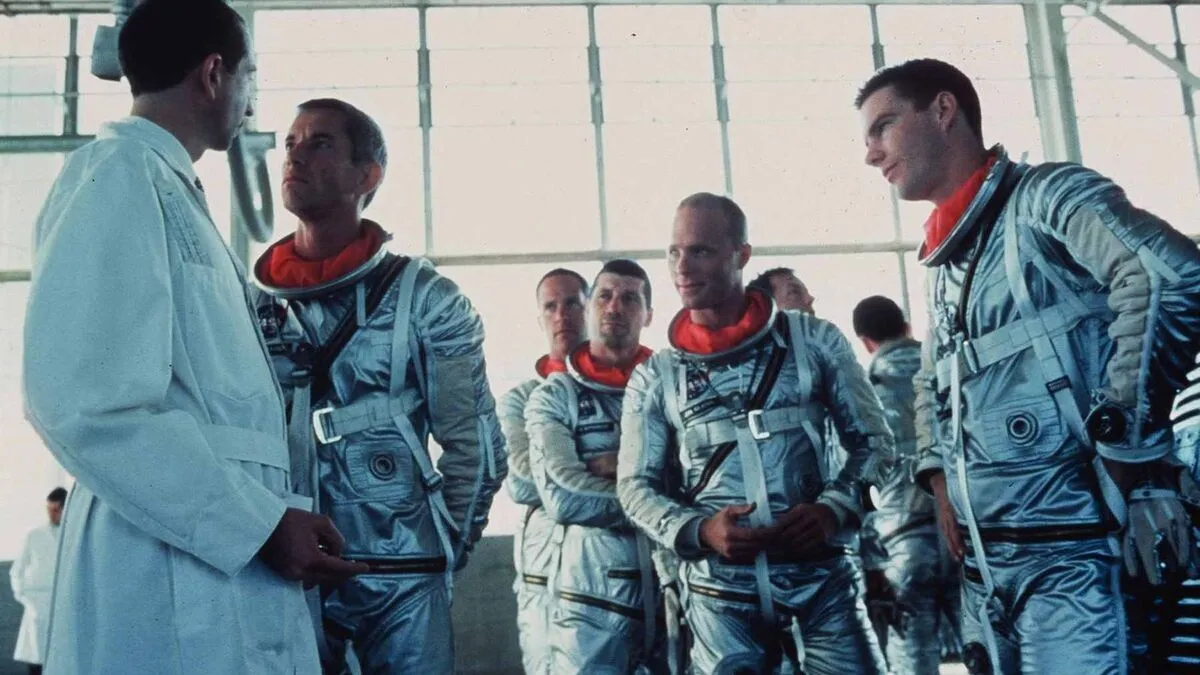
Philip Kaufman's space epic won four Academy Awards, topped both Siskel's and Ebert's lists for the year, and lost enough money to take its production company down with it. Here's how a film that good failed that badly.
A film can be the best-reviewed release of its year and still end a studio. The Right Stuff managed both inside about four months.
The numbers are not close. The Ladd Company spent $27 million adapting Tom Wolfe's 1979 book about the Mercury Seven; the film grossed $21.1 million domestically. It premiered at the Kennedy Center on 16 October 1983, opened in limited release on 229 screens five days later, and took $1.6 million on its opening weekend, finishing seventh. A wide expansion to 627 theaters on 17 February 1984 added roughly the same amount again, and that was that.
The running time
192 minutes, with no intermission and no way around it. A three-hour-twelve-minute film cuts the number of daily showings an exhibitor can run, which halves the revenue ceiling of every screen it occupies before anyone buys a ticket.
Read more: Failure to deliver on its 30-movie promise could cost Paramount ' Scream', 'Scary Movie', and more
Nobody on the poster was a movie star
The cast reads like a hall of fame now — Sam Shepard, Ed Harris, Dennis Quaid, Scott Glenn, Fred Ward, Barbara Hershey — and in 1983 not one of them opened a picture. There was no name above the title to sell a three-hour ensemble drama about test pilots to an audience that had Terms of Endearment, Sudden Impact, and Return of the Jedi to choose from.
The John Glenn problem
This is the part people forget. John Glenn, played in the film by Ed Harris, was running for the 1984 Democratic presidential nomination while the movie was in theaters. The press covered the release as a campaign event.

Newsweek ran a cover asking: "Can a Movie Help Make a President?"
That framing turned an ensemble film about seven astronauts into a suspected political operation. Audiences who didn't want to buy a ticket to a campaign ad stayed home, and Glenn's candidacy collapsed anyway — he withdrew in March 1984.
What it won, and what it cost
The film took eight Oscar nominations including Best Picture, and won four: Film Editing, Original Score for Bill Conti, Sound, and Sound Effects Editing. Best Picture went to Terms of Endearment. Roger Ebert and Gene Siskel each named The Right Stuff the best film of 1983. It sits at 96% on Rotten Tomatoes and entered the National Film Registry.
The Ladd Company did not survive it. Combined with the failure of Twice Upon a Time the same year, the loss ended the company's run, and Warner Bros. wound down the partnership — even though the outfit released Police Academy in 1984 and made $150 million on it.
Home video rescued the reputation but not the ledger. Disney+ tried a series version in 2020; it ran one season.
Earlier we wrote: Martin Scorsese spotlights the George Lucas brilliance that doesn’t get enough credit